Cómo la selección de materiales influye en el rendimiento y la vida útil de las válvulas de bola | GEKO Valve
Aug 08, 2026
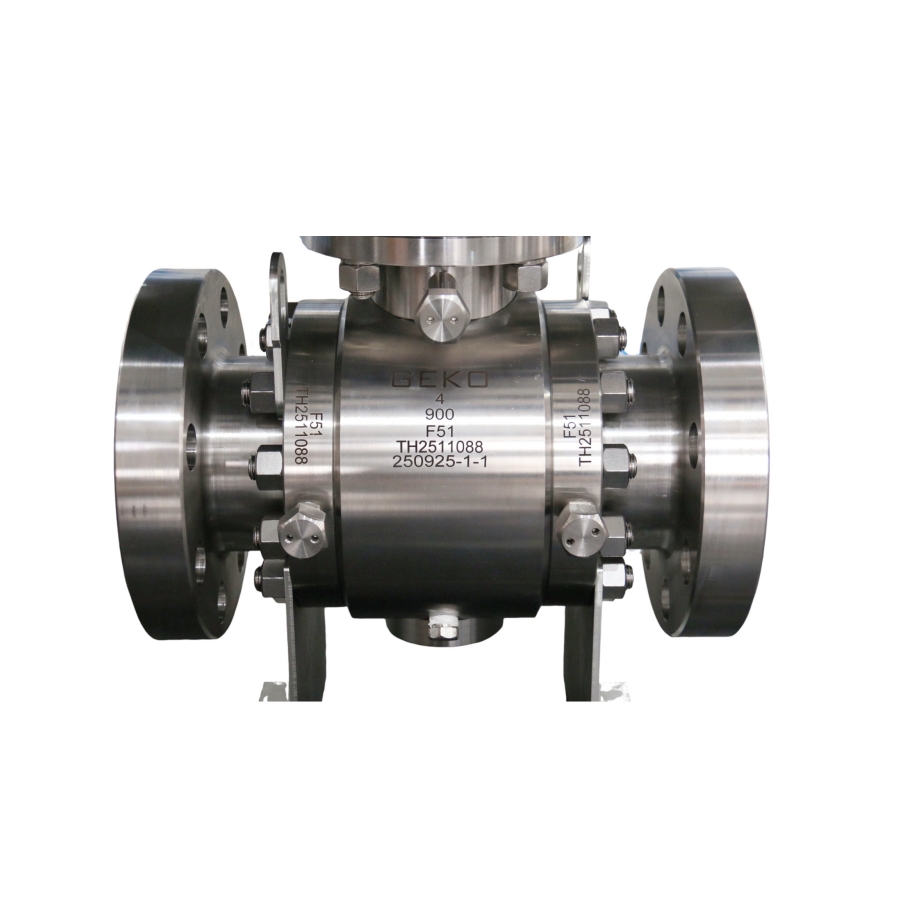
Cómo la selección de materiales influye en el rendimiento y la vida útil de las válvulas de bola.El rendimiento, la estabilidad operativa y la vida útil de las válvulas de bola no dependen principalmente del diseño estructural ni de la precisión del montaje, sino de la selección de materiales. Las válvulas de bola industriales operan bajo diversas condiciones de presión, temperatura y fluido, donde la aleación del cuerpo, los componentes internos y los materiales de sellado controlan directamente la resistencia a la corrosión, la tolerancia a la temperatura, la capacidad de presión y la resistencia al desgaste. Muchas fallas prematuras de las válvulas, como fugas internas, daños en el asiento, agrietamiento del cuerpo y erosión del fluido, se deben a una combinación inadecuada de materiales, más que a defectos de calidad del producto. Este artículo explica cómo los diferentes materiales de las válvulas de bola influyen en su rendimiento y vida útil, ayudando a ingenieros y compradores a seleccionar válvulas duraderas y adecuadas para sistemas de tuberías industriales.Por qué la selección del material de las válvulas es fundamental para los sistemas industriales.En aplicaciones de tuberías industriales, las válvulas de bola actúan como componentes clave de control y aislamiento, con requisitos de operación continua a largo plazo. Cada material utilizado en la fabricación de válvulas tiene limitaciones físicas y químicas específicas. El acero al carbono, el acero inoxidable, el acero aleado y los polímeros de sellado responden de manera diferente a las altas y bajas temperaturas, los fluidos corrosivos, la erosión por partículas y los ciclos de presión.Una configuración de materiales inadecuada degrada gradualmente el rendimiento de la válvula: los sellos se endurecen y presentan fugas a temperaturas extremas, los cuerpos de las válvulas se corroen y se adelgazan en medios químicos, y los componentes internos se desgastan rápidamente en fluidos abrasivos. Estos problemas reducen la vida útil de la válvula, aumentan la frecuencia de mantenimiento y provocan paradas industriales imprevistas. Una selección adecuada de materiales maximiza la estabilidad operativa y prolonga la vida útil de las válvulas de bola durante décadas. Cómo el material del cuerpo de la válvula influye en el rendimiento y la vida útil.El cuerpo de la válvula es la estructura principal que soporta la presión en una válvula de bola. Su material determina la presión máxima que puede soportar, su adaptabilidad a la temperatura, su resistencia a la corrosión y la durabilidad estructural de toda la válvula.Acero al carbono WCBEl acero al carbono WCB es el material más común para cuerpos de válvulas de uso general, gracias a su alta resistencia mecánica, excelente resistencia a la presión y rentabilidad. Ofrece un rendimiento estable en sistemas de vapor a alta temperatura, productos derivados del petróleo convencionales y agua industrial no corrosiva.Impacto en el rendimiento: El acero al carbono mantiene una tenacidad estructural estable a temperaturas medias y altas. Sin embargo, es propenso a la oxidación y la corrosión química en ambientes ácidos, alcalinos o húmedos. Además, sufre fragilidad por frío a temperaturas ultrabajas, lo que reduce considerablemente su vida útil.Escenarios de vida útil óptima: Tuberías auxiliares de centrales eléctricas, sistemas de calefacción, tuberías generales para procesos petroquímicos no corrosivos.Acero inoxidable SS304 / SS316Los aceros inoxidables SS304 y SS316 son los materiales más comunes para válvulas anticorrosión. El SS316 incorpora molibdeno, lo que le confiere una mayor resistencia a la corrosión por cloruros y a los agentes químicos oxidantes.Impacto en el rendimiento: El acero inoxidable resiste eficazmente la oxidación, la corrosión por agua y la corrosión por ácidos y álcalis débiles. Presenta una excelente tenacidad a bajas temperaturas sin agrietamiento frágil, adaptándose a condiciones de trabajo normales y criogénicas. En comparación con el acero al carbono, las válvulas de acero inoxidable tienen una vida útil mucho mayor en entornos húmedos, corrosivos y de baja temperatura.Escenarios de máxima vida útil: Tratamiento de agua, oleoductos químicos, industria alimentaria, sistemas marinos de baja corrosión y tuberías exteriores expuestas. Acero inoxidable dúplexEl acero dúplex integra las ventajas del acero inoxidable austenítico y ferrítico, con una resistencia ultra alta y una gran resistencia a la corrosión bajo tensión.Impacto en el rendimiento: Resiste perfectamente el agua de mar, la salmuera, los ácidos fuertes y los medios con alto contenido de cloruro que erosionan fácilmente el acero inoxidable común. Evita la corrosión por picaduras y el agrietamiento por tensión, manteniendo un rendimiento estable en entornos corrosivos agresivos y logrando la mayor vida útil en sistemas industriales de alta salinidad.Escenarios de máxima vida útil: Ingeniería naval, plantas desalinizadoras, sistemas de procesos químicos altamente corrosivos.Acero aleadoLos materiales de acero aleado están optimizados para condiciones de trabajo de temperaturas y presiones extremadamente altas, con una excelente resistencia a la fluencia a altas temperaturas y una gran estabilidad estructural.Impacto en el rendimiento: El acero al carbono y el acero inoxidable comunes se deforman y fatigan bajo temperaturas y presiones ultra altas prolongadas. El acero aleado mantiene propiedades mecánicas estables, lo que evita la deformación del cuerpo y la falla del sello, extendiendo considerablemente la vida útil de la válvula en sistemas industriales térmicos de alta exigencia.Escenarios de vida útil óptima: tuberías de centrales térmicas de alta temperatura, sistemas de procesos que contienen hidrógeno, tuberías industriales pesadas de alta presión. Cómo el material del asiento y del sello determina la vida útil de la válvula.Si bien el cuerpo de la válvula garantiza la seguridad estructural, el material de sellado y el proceso de tratamiento de la superficie del asiento determinan directamente el rendimiento de cierre, la resistencia al desgaste y la vida útil efectiva. Más del 80 % de las fallas en las válvulas de bola industriales se deben al envejecimiento del sello, la deformación por altas temperaturas, la abrasión por partículas y los daños por corrosión, en lugar de daños estructurales en el cuerpo de la válvula. Las configuraciones de sellado industriales comunes incluyen sellos blandos de polímero, sellos de plástico de ingeniería de alto rendimiento y sellos duros de metal con procesos de recubrimiento duro como el recubrimiento duro STL, que cubren un amplio rango de condiciones de trabajo, desde medios limpios a temperatura normal hasta entornos extremos de alta temperatura, alta presión, abrasivos y corrosivos.Sello blando de PTFE/RPTFEEl PTFE y el RPTFE reforzado son materiales de sellado clásicos de uso general, que ofrecen una excelente inercia química y un sellado hermético.Impacto en el rendimiento: Se adaptan a la mayoría de los fluidos químicos limpios y a sistemas de agua y gas a temperatura normal. Sin embargo, son propensos a la deformación térmica y al envejecimiento a temperaturas superiores a 200 °C, y se desgastan fácilmente al entrar en contacto con partículas sólidas diminutas, lo que provoca fugas internas graduales y una menor vida útil.PEEK y sello de alto rendimiento modificadoEl PEEK (poliéter éter cetona) es un plástico de ingeniería de alta resistencia y calidad superior para sellado, que supera con creces al PTFE y al RPTFE en resistencia a la temperatura, al desgaste y a la deformación por fluencia. Los materiales PEEK modificados y mejorados también se personalizan ampliamente para condiciones de trabajo industriales complejas.Impacto en el rendimiento: Las juntas de PEEK resisten la abrasión por partículas finas, la corrosión moderada y el envejecimiento a temperaturas moderadamente altas, manteniendo una elasticidad de sellado estable a temperaturas de trabajo continuas de hasta 250 °C. Retrasan eficazmente el desgaste y la deformación permanente de la junta, duplicando o incluso triplicando la vida útil de las válvulas de junta blanda convencionales. Son la opción de sellado óptima para fluidos de yacimientos petrolíferos, lodos químicos y tuberías de procesos mixtos gas-líquido con impurezas mínimas.Recubrimiento duro STL y sellado duro metal-metalLas válvulas de bola de asiento duro metal-metal adoptan una estructura de sellado totalmente metálica, y la superficie de sellado resistente al desgaste del núcleo se procesa con tecnología de soldadura por recubrimiento de STL (Stellite), que es el proceso de sellado de alta gama más crítico para válvulas que operan en condiciones extremas. Los grados STL más comunes incluyen STL6 y STL12, que se caracterizan por su altísima dureza, resistencia a la abrasión y resistencia a la corrosión a altas temperaturas. Impacto en el rendimiento: Los asientos metálicos con revestimiento duro STL evitan por completo los defectos de envejecimiento, reblandecimiento y fragilización de los sellos de polímero bajo temperaturas extremas. La capa de soldadura superpuesta forma una capa protectora densa y de alta dureza en la superficie de la bola y el asiento de la válvula, resistiendo la abrasión de fluidos a alta velocidad, partículas sólidas, alta presión y temperaturas ultra altas. Mantiene un rendimiento de sellado estable para conmutaciones cíclicas a largo plazo, logrando una vida útil ultralarga en tuberías de vapor, aceite térmico, gas a alta presión y medios abrasivos. La única limitación es una estanqueidad inicial ligeramente inferior a la de los sellos blandos, que cumple con el estándar industrial de cero fugas para asientos duros después del rectificado de precisión. Cómo afecta el material de acabado a la estabilidad operativa a largo plazoEl revestimiento interno, que incluye el núcleo de bola y el vástago, está en contacto directo con el fluido. Los materiales de revestimiento de alta calidad evitan la abrasión, la oxidación y el desgaste por fricción durante los cambios frecuentes de válvula. Los materiales de revestimiento de baja calidad provocan picaduras en el núcleo de bola y atascos en el vástago tras un uso prolongado, lo que resulta en una acción de válvula rígida y un cierre defectuoso. El revestimiento de acero inoxidable pulido de alta precisión garantiza un rendimiento de conmutación estable y un funcionamiento sin atascos a largo plazo, lo que mejora considerablemente la vida útil de las válvulas de bola.Errores comunes de incompatibilidad de materiales que acortan la vida útil de las válvulas.La mayoría de los problemas de degradación prematura y fugas en las válvulas de bola se deben a una combinación incorrecta de materiales con el fluido de operación y las condiciones de trabajo. A continuación, se detallan los errores más frecuentes de incompatibilidad de materiales en la industria que reducen drásticamente el rendimiento y la vida útil de la válvula:- El uso de válvulas de bola de acero al carbono para fluidos químicos corrosivos provoca una rápida oxidación y perforación del cuerpo.- El uso de juntas blandas de PTFE convencionales para vapor a alta temperatura y fluidos con partículas provoca un rápido envejecimiento de las juntas y fugas.- El uso de válvulas estándar de acero inoxidable para agua de mar y entornos con alto contenido de cloruro provoca corrosión por picaduras.- Aplicación de válvulas de bola monofásicas de acero inoxidable SS304 para sistemas de ciclos marinos y de salmuera intensa, lo que provoca agrietamiento por corrosión bajo tensión.- El uso de válvulas de PEEK con junta blanda para servicio de vapor a temperaturas ultra altas provoca deformación térmica y fallos en la junta.- El despliegue de válvulas de bola de acero al carbono WCB para gasoductos de nitrógeno líquido criogénico y GNL provoca fractura frágil a baja temperatura. Lista completa de especificaciones de materiales para válvulas de bola industriales y tipos de válvulas correspondientes.Para ayudar a compradores e ingenieros a seleccionar el material adecuado, a continuación se presentan las configuraciones de materiales más comunes para válvulas de bola y sus correspondientes tipos de válvulas especializadas, que incluyen acero al carbono, acero inoxidable, acero aleado, acero dúplex y materiales de sellado de alto rendimiento. Cada material corresponde a válvulas de bola industriales exclusivas para condiciones de trabajo específicas.Válvulas de bola de la serie de acero al carbonoLas válvulas de acero al carbono son las válvulas industriales de uso general más rentables, diseñadas específicamente para sistemas no corrosivos de alta y media temperatura.- Válvula de bola de acero al carbono WCB: Válvula de bola de acero al carbono fundido para tuberías de vapor, petróleo y agua industriales en general.- Válvula de bola de acero forjado A105: Válvula de acero al carbono forjado con mayor densidad y resistencia a la presión, adecuada para tuberías de alta presión en centrales eléctricas.Válvulas de bola de la serie de acero inoxidableLas válvulas de bola de acero inoxidable se utilizan ampliamente en entornos industriales sanitarios, de baja temperatura y anticorrosión, y están disponibles en múltiples especificaciones de calidad.- Válvula de bola de acero inoxidable SS304: Válvula de bola anticorrosión general para tratamiento de agua y medios químicos débiles.- Válvula de bola de acero inoxidable SS316: Válvula de bola anticorrosión con molibdeno y resistente a los cloruros para sistemas químicos y marinos de baja corrosión.- Válvula de bola de acero inoxidable de alta temperatura SS310S: Válvula de acero inoxidable resistente al calor para tuberías de gases de combustión y fluidos calientes a temperaturas ultra altas.Válvulas de bola de acero dúplex y superdúplexMateriales anticorrosión de alta gama para válvulas, destinados a entornos industriales agresivos, con alto contenido de cloruros y altamente corrosivos.- Válvula de bola de acero dúplex 2205: Válvula de bola de acero de doble fase para salmuera, agua de mar y medios corrosivos fuertes en general.- Válvula de bola superdúplex 2507: Válvula superdúplex de alta resistencia para sistemas de desalinización e ingeniería marina en alta mar.Válvulas de bola de acero de alta aleaciónVálvulas de aleación especial, diseñadas a medida para condiciones de trabajo extremadamente altas, altas presiones y con alto contenido de hidrógeno.- Válvula de bola de acero aleado F11: Válvula de aleación de alta presión y temperatura media para sistemas auxiliares de centrales térmicas.- Válvula de bola de acero aleado F22: Válvula de bola de aleación resistente a altas temperaturas para tuberías de hidrogenación y procesos industriales pesados.Válvulas de bola con material de sellado de alto rendimientoLos diferentes materiales de sellado determinan la resistencia a la temperatura, al desgaste y a la corrosión de las válvulas de bola terminadas, lo que da lugar a distintos tipos de productos.- Válvula de bola con asiento blando de PTFE: Válvula de bola de sellado blando de uso general y sin fugas para fluidos limpios a temperatura normal.- Válvula de bola con asiento reforzado con RPTFE: Válvula de bola de PTFE modificado resistente al desgaste para medios ligeramente abrasivos a temperatura media.- Válvula de bola con asiento de PEEK: Válvula de bola de sellado de alta resistencia al desgaste y a la temperatura para fluidos de proceso que contienen partículas.- Válvula de bola con asiento metálico y revestimiento duro STL: Válvula de bola con asiento duro soldada con revestimiento de estelita para medios abrasivos de alto desgaste, alta temperatura y alta presión. Cómo seleccionar el material de la válvula adecuado para las condiciones de trabajo.Para tuberías de vapor y centrales eléctricas de alta temperatura, no corrosivas, seleccione válvulas de bola de acero al carbono WCB o válvulas de bola de acero forjado A105. Para sistemas de agua y productos químicos anticorrosivos de uso diario, las válvulas de bola de acero inoxidable SS304 y SS316 son las opciones más fiables. Para entornos marinos, de desalinización y corrosivos con alto contenido de cloruro, las válvulas de bola de acero dúplex 2205 y las válvulas de bola superdúplex 2507 evitan eficazmente la corrosión por picaduras y la corrosión bajo tensión. Para sistemas térmicos de alta presión y alta temperatura, las válvulas de bola de acero aleado F11 y F22 garantizan una estabilidad estructural a largo plazo.En cuanto a la configuración del sellado, las tuberías limpias a temperatura normal priorizan las válvulas de bola con asiento blando de PTFE para evitar fugas; los fluidos con partículas finas y los sistemas de procesos a temperatura media adoptan válvulas de bola con asiento de PEEK para una excelente resistencia al desgaste; las tuberías industriales de vapor a alta temperatura, alta presión y abrasivas deben utilizar válvulas de bola con asiento metálico de revestimiento duro STL para resistir la erosión y evitar el envejecimiento y la falla del sello. ConclusiónEl rendimiento y la vida útil de las válvulas de bola dependen fundamentalmente de la selección científica de los materiales. Cada especificación de material, desde acero al carbono WCB/A105, acero inoxidable SS304/SS316, acero dúplex 2205/2507, acero aleado F11/F22 hasta configuraciones de sellado profesionales, incluyendo juntas blandas y duras de PTFE/RPTFE/PEEK y juntas metálicas soldadas con recubrimiento de revestimiento duro STL, tiene escenarios de trabajo específicos. La correcta selección de materiales elimina fallos comunes como la corrosión, la fragilidad a bajas temperaturas, el envejecimiento a altas temperaturas y el desgaste abrasivo, maximizando la vida útil de la válvula y reduciendo los costes de mantenimiento industrial.GEKO Valve ofrece válvulas de bola personalizadas con especificaciones completas, incluyendo acero al carbono, acero inoxidable, acero dúplex, acero aleado y diversas válvulas de bola con asiento de alto rendimiento, proporcionando soluciones de válvulas duraderas y específicas para sistemas de tuberías industriales, químicos, marinos, de tratamiento de agua y de uso extremo.
LEER MÁS






 Correo electrónico
: info@geko-union.com
Correo electrónico
: info@geko-union.com
 Correo electrónico
: info@geko-valves.de
Correo electrónico
: info@geko-valves.de
 Correo electrónico
: tw@geko-union.com
Correo electrónico
: tw@geko-union.com
 Correo electrónico
: nl@geko-union.com
Correo electrónico
: nl@geko-union.com



 Red IPv6 compatible